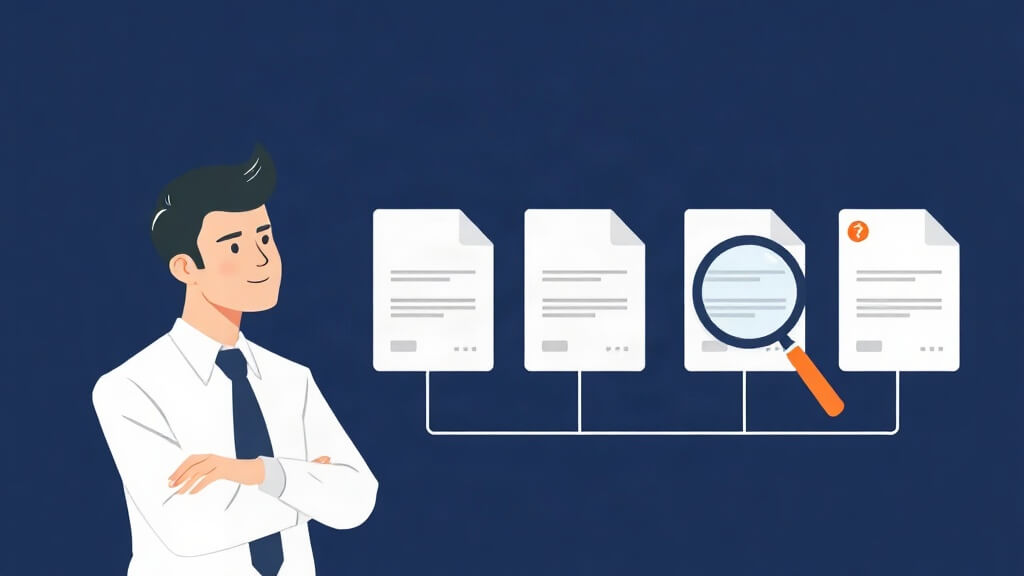
Short answer: Mortgage document automation should be evaluated as a reviewable workflow for requests, record context, status meaning, ownership, and exceptions. A visible status or a file in a system does not by itself prove that the item is complete, current, appropriate, or reviewed by the right person.
This is an operational evaluation guide for mortgage professionals. It does not determine what documents are required, whether a document is sufficient, how long records should be retained, or what a lender, brokerage, jurisdiction, or legal process requires. Use the organization's approved policy and responsible reviewers for those decisions.
Start with document ownership and source context
Before a workflow is used, name the information or document category, the authoritative source, the person responsible for the next action, and the point where a normal path must pause for review. This is more useful than treating every document indicator as the same kind of status.
| Review question | What to document | Exception to test |
|---|---|---|
| What is being requested or tracked? | The category, stated purpose, record context, and authoritative source. | A request that belongs to a different record or lacks enough context. |
| Who owns the next action? | The accountable role, backup route, and review handoff. | The usual owner is unavailable when a response arrives. |
| What does the status mean? | The stated definition, last activity, and the source that supports it. | A status that conflicts with the source record or a person's report. |
| What changes the ordinary path? | The pause, correction, escalation, or follow-up condition. | An incomplete, duplicate, or uncertain item that needs human review. |
| What evidence remains? | The request context, activity trail, decision owner, and resolved exception note. | A second reviewer reconstructing why the record moved forward or paused. |
Use a three-record document workflow test
- Ordinary record: Review the request, source context, owner, status definition, and next action together.
- Exception record: Review a missing, duplicate, or conflicting item and show who decides what happens next.
- Handoff record: Review how a person receiving the record can understand the open question without inferring meaning from a label alone.
These tests assess whether the workflow is understandable and reviewable. They do not establish that an item is complete, valid, delivered, retained, approved, or sufficient for a lending decision.
Keep document review distinct from portal and integration questions
Document automation focuses on request context, source, ownership, and exceptions. A borrower-facing experience is a different question covered in the mortgage borrower portal evaluation guide. When information crosses systems, use the mortgage CRM integration checklist to clarify the source, fields, direction, and correction owner before relying on a status.
Recorded workflow reference
This public BNTouch tutorial shows a historical document-workflow example. Use it as source material for a demonstration conversation about request context, record activity, and the questions a team should resolve before relying on a status.
Source: BNTouch document management walkthrough.
Scope of this recorded source: The tutorial demonstrates one historical configuration example. It does not establish current behavior, access, data handling, commercial terms, document sufficiency, record retention, legal compliance, or a required process for another organization. Confirm the current workflow and the organization's approved process in a live review.
Additional recorded source: See the BNTouch Document Management & e-Sign webinar for a separate training walkthrough. Confirm current configuration, permissions, record context, and the organization's approved process before relying on any workflow.
Use primary guidance for disclosure questions
The CFPB Loan Estimate and Closing Disclosure overview explains consumer-facing disclosure context. It does not define a CRM or document workflow and is not legal advice. Use the organization's counsel and approved policy when a workflow touches required documents or disclosures.
Bring one ordinary document request and one exception scenario to a practical workflow review.
Further reading: Mortgage CRM compliance and document tracking questions; mortgage borrower portal evaluation guide.